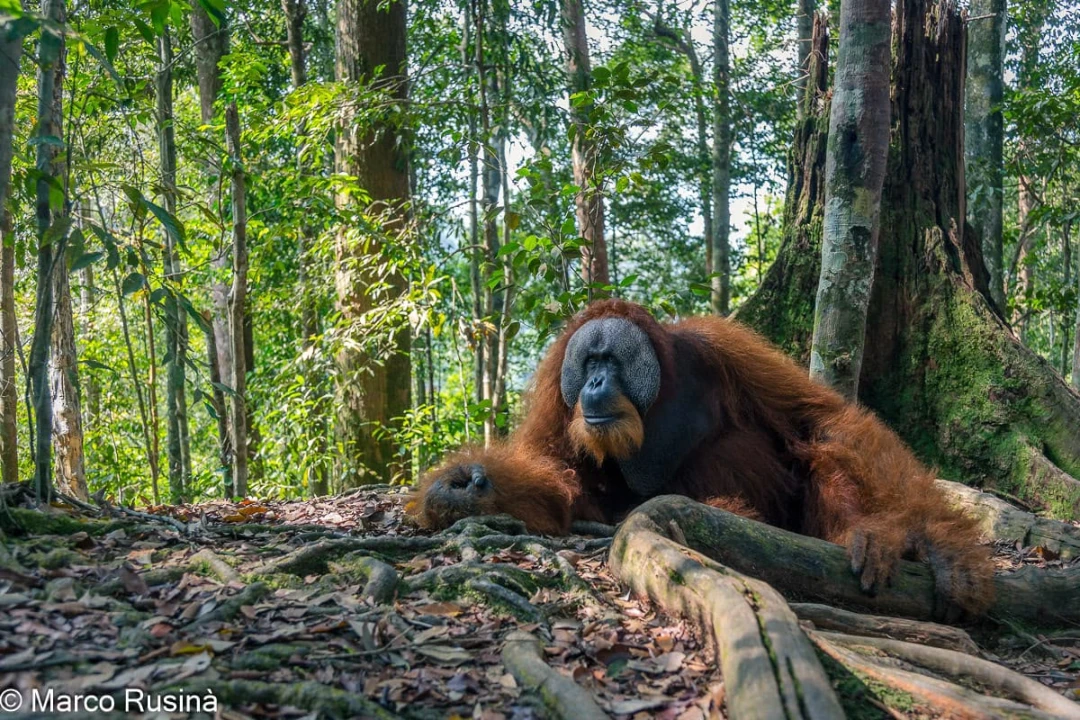
Orangutan trekking in Bukit Lawang can be ethical, but the word “ethical” on a tour page is not enough.
A responsible trek allows orangutans to move, feed, and rest without interference. Visitors keep their distance. Guides do not use food to attract wildlife. Nobody touches, calls, chases, or blocks an animal for a photograph.
The quality of the experience should not be measured by how close you get. It should be measured by how little your presence changes the animal’s natural behaviour.
What Ethical Orangutan Trekking Actually Looks Like
Ethical trekking is a complete approach to wildlife observation. It begins before you enter the rainforest and continues throughout every encounter.
A responsible trek should:
- Let wildlife encounters happen naturally
- Maintain a respectful distance
- Never feed, touch, call, or chase wildlife
- Keep voices and movement controlled near animals
- Follow the guide’s instructions immediately
- Avoid blocking an animal’s route
- Keep food and rubbish away from wildlife
- Be honest that sightings are never guaranteed
You can read our complete jungle trekking rules before entering the forest.
Wildlife Encounters Should Not Be Forced
Orangutans are not waiting at fixed points for tourists. They move through the forest according to food, weather, nesting, and other natural factors.
A guide can look for signs, listen for movement, and choose a suitable trail. A guide should not use food, sounds, or crowd pressure to force an encounter.
If no orangutan appears, that does not mean the trek has failed. The rainforest is still home to plants, insects, birds, primates, and many other signs of life.
Animal Welfare Comes Before Photos
A responsible guide may ask you to step back, lower your voice, stop taking pictures, or leave an area.
That decision may be disappointing when you have travelled a long way. It is still the correct decision when an animal appears uncomfortable or needs space.
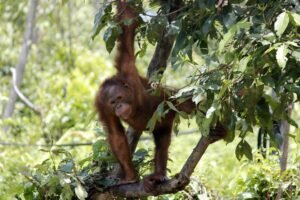
A good photograph does not have to be a close photograph. An image of an orangutan among branches and leaves often tells a more honest story about the animal and its habitat.
Why Distance Matters Around Orangutans
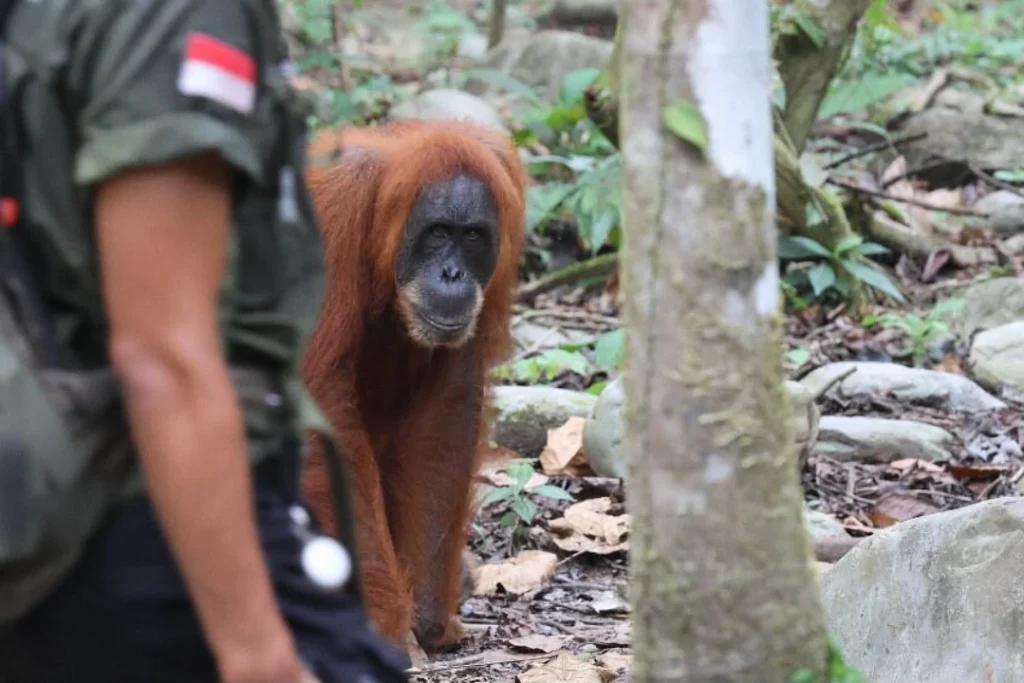
Distance protects both visitors and orangutans.
The visitor guidance for Bukit Lawang reproduced in the IUCN Best Practice Guidelines for Great Ape Tourism states that visitors should remain at least ten metres from the closest orangutan.
Your guide may ask you to move even farther away. The appropriate position depends on the animal’s location, movement, and behaviour.
Keep at Least Ten Metres Away
Do not move closer because an orangutan appears calm. An animal that is used to seeing people is still a powerful wild animal with its own boundaries.
Maintaining distance also reduces the risk of passing illness between humans and great apes.
Use your camera zoom instead of approaching. Do not move vegetation to create a clearer photograph, and do not stand where the animal may feel trapped.
What to Do if an Orangutan Approaches
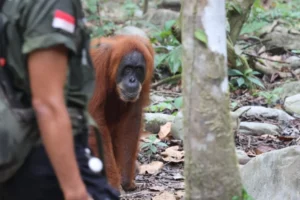
An orangutan may move towards a group even when visitors have maintained the correct distance.
If this happens:
- Stay calm
- Do not touch the animal
- Do not offer food
- Do not run
- Do not block its path
- Move away when instructed
- Let your guide manage the situation
Never stand between two orangutans, especially between a mother and her infant.
Do Not Trek When You Are Sick
Do not join an orangutan trek if you have a fever, flu symptoms, or another illness that may be contagious.
Tell the trekking team before departure if you feel unwell. Changing your plans is better than creating an avoidable health risk for wildlife or other guests.
Why Feeding and Touching Are Never Harmless
Feeding may create an exciting moment for a visitor, but it can change how an animal behaves around people.
An orangutan that learns to associate visitors with food may begin approaching groups or waiting near busy trails. This can reduce natural foraging behaviour and create difficult encounters when food is not provided.
Visitors should not offer fruit, snacks, drinks, or leftovers to any wildlife. This rule also applies to monkeys and other animals.
Touching Creates Risks for Both Sides
An orangutan should never be touched, even when it moves within reach.
Physical contact increases the possibility of illness passing between humans and orangutans. It can also turn a calm encounter into an unpredictable situation.
Do not assume that a familiar or relaxed animal is safe to approach. Follow the same rules for every orangutan you encounter.
Wild, Habituated and Semi Wild Orangutans
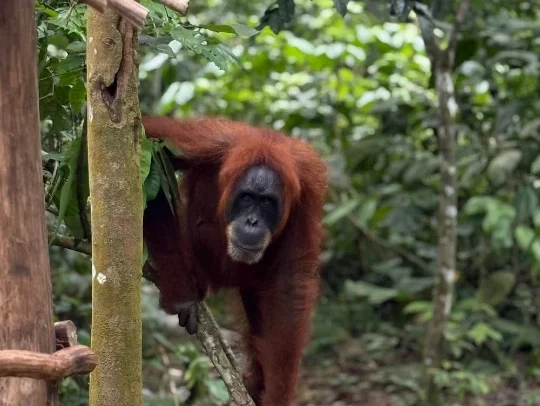
Travellers may hear orangutans around Bukit Lawang described as wild, habituated, rehabilitated, or semi wild.
Wild orangutans have grown up independently in the forest. Habituated animals have become used to human presence. Some orangutans in the wider Bukit Lawang area have a history connected to rehabilitation and previous human contact.
The term semi wild is often used locally for orangutans that live independently but are more accustomed to seeing people.
These descriptions should never be treated as permission to get closer. Every orangutan deserves the same distance and respect.
An animal that appears comfortable around people may be more likely to approach. That makes careful group management more important, not less important.
How to Choose a Responsible Trekking Operator
Any operator can use words such as ethical, sustainable, or eco friendly. Look at the practices behind those words.
A responsible operator should answer practical questions without avoiding details.
Questions to Ask Before Booking
Consider asking:
- What distance do you maintain from orangutans?
- What happens if an orangutan approaches the group?
- Do your guides ever feed or call wildlife?
- How many guests normally trek together?
- Do you guarantee orangutan sightings?
- What wildlife briefing is provided before the trek?
- What happens if someone does not follow the rules?
- Are the necessary guide arrangements and park permits included?
Clear answers are more useful than broad promises about being the most ethical or most sustainable company.
Signs of a Responsible Operator
Look for an operator that:
- Explains its wildlife policy before booking
- Provides a briefing before entering the forest
- Does not guarantee sightings
- Does not advertise touching or close encounters
- Uses guides who understand local wildlife rules
- Is willing to end an encounter when necessary
- Explains what is included in the trek
- Gives realistic information about trail and weather conditions
Responsible guides should be comfortable saying no, including when a guest asks to move closer for a photograph.
Warning Signs to Avoid
Be cautious if an operator or guide:
- Promises that you will definitely see an orangutan
- Offers feeding as part of the experience
- Encourages touching
- Uses food or sounds to attract wildlife
- Allows visitors to crowd an animal
- Blocks an orangutan’s route
- Ignores illness before departure
- Promotes close contact as the main attraction
A low price alone does not prove that an operator is irresponsible. Judge the actual wildlife policy, guiding standards, permit arrangements, group management, and transparency.
Your Responsibility During the Trek
Even a responsible guide needs cooperation from every guest.
Stay with your group and follow instructions about distance, movement, rest stops, river crossings, and wildlife encounters.
Keep your voice low when animals are nearby. Avoid sudden movement and never call an orangutan to make it look towards your camera.
Do not use flash photography. Keep food inside your bag and avoid eating near orangutans or monkeys.
Carry all rubbish back to the village. This includes tissues, food packaging, and organic waste. Do not collect plants, seeds, insects, or other natural materials from the forest.
If another visitor pressures the guide to move closer, you do not have to join them. Respecting wildlife is more important than copying the behaviour of a crowd.
What a Responsible Wildlife Encounter Feels Like
An ethical encounter is often quieter and less controlled than the experience shown on social media.
The orangutan may remain high in the canopy. Leaves may block part of your view. The animal may turn away or move deeper into the forest.
That freedom is the point.
You are visiting its habitat. The orangutan is not performing for you.
A respectful encounter gives the animal space to decide whether it stays or leaves. It also allows visitors to observe more natural behaviour instead of behaviour shaped by food or crowd pressure.
Are Orangutan Sightings Guaranteed?
No responsible operator can guarantee an orangutan sighting.
Orangutans and other animals move freely through the forest. Sightings depend on natural movement, weather, trail conditions, and the route taken that day.
A longer trek gives you more time in the rainforest, but it still cannot guarantee an encounter.
Be cautious when a tour promises specific wildlife. Honest expectations are one of the clearest signs of a responsible operator.
Does Ethical Trekking Support Conservation and Local People?
Well managed tourism can create work for local guides, cooks, drivers, accommodation teams, and other people living around Bukit Lawang.
It can also help visitors understand why rainforest habitat and responsible wildlife observation matter.
However, booking a trek does not automatically prove that money reaches a conservation programme. Operators should explain any donation, community project, or environmental contribution with clear and verifiable information.
Gunung Leuser National Park is one of the three parks that form the UNESCO Tropical Rainforest Heritage of Sumatra. Visitors should treat the forest as a protected wildlife habitat, not simply as a background for photographs.
Choosing an Ethical Trek in Bukit Lawang
Choose a trekking duration based on your available time, fitness, and comfort with rainforest conditions.
The duration does not determine whether a trek is ethical. A short trek and a multiday trek should follow the same wildlife principles.
You can compare our Bukit Lawang jungle trekking options before choosing a route.
If you want an overnight experience without committing to a longer expedition, consider the 2 Days 1 Night Jungle Trek.
Travellers who are comfortable with two nights of simple rainforest camping can read about the 3 Days 2 Nights Jungle Trek.
Before booking, ask the team about wildlife distance, group management, fitness requirements, weather flexibility, and what happens when an orangutan approaches.
Frequently Asked Questions
Is it ethical to see orangutans in Bukit Lawang?
It can be ethical when encounters happen naturally and both guides and guests follow clear wildlife rules. Nobody should feed, touch, call, chase, or block an orangutan.
How close can I get to an orangutan?
Visitors should remain at least ten metres away. Your guide may ask you to move farther back depending on the animal’s position and behaviour.
Can I touch an orangutan if it approaches me?
No. Stay calm, do not touch or feed it, and follow your guide immediately. The group should move away rather than allowing the animal to come into contact with visitors.
Are the orangutans in Bukit Lawang wild?
Orangutans in the area have different histories and levels of familiarity with people. Some are wild, while others may be habituated or connected to past rehabilitation. Every orangutan should be treated as wildlife.
What should I do if a guide offers food to an orangutan?
Do not participate. Politely say that you do not want wildlife to be fed and do not take advantage of the situation for a closer photograph.
Should I trek if I have a cold or fever?
No. Contact the trekking team before departure and explain your symptoms. Avoid entering the forest when you may have a contagious illness.
Are sightings more likely on a longer trek?
A longer route provides more time in the rainforest, but no duration can guarantee a sighting. Wildlife encounters always depend on natural conditions.
Plan a Responsible Orangutan Trek
Looking for an orangutan trek that respects wildlife distance and natural behaviour?
Explore the available trekking options or contact the local team on WhatsApp with your preferred date, group size, and questions about the wildlife guidelines.
You do not need to book immediately. Ask how the trek is managed, choose a route that suits your fitness, and make sure you are comfortable with the rules before entering the forest.