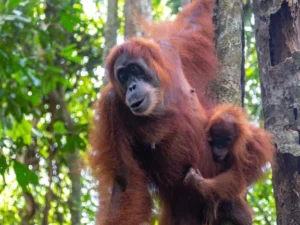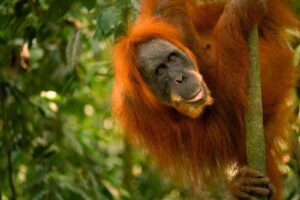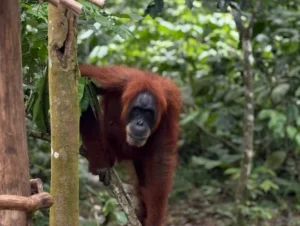

Most people book a jungle trek in Sumatra for one reason. They want to see an orangutan. That’s honest, and it’s a perfectly good reason to travel this far. Sumatra orangutan treks around Bukit Lawang are the main draw for most visitors to this region, but the forest has a habit of surprising people in ways they didn’t plan for, and it’s usually those unplanned moments that end up in the stories they tell when they get home.
Gunung Leuser National Park is a UNESCO Tropical Rainforest Heritage site covering more than 1.09 million hectares of some of the most biologically dense jungle in Southeast Asia. The orangutans are real and extraordinary, and you do stand a solid chance of encountering them. What the brochures tend to understate is everything else sharing that canopy: the gibbons you hear before you ever see them, the hornbills crossing overhead, the leaf monkeys watching you from a branch twenty meters up. The jungle doesn’t give you just one thing.
This guide coversthe full picture: the wildlife that actually lives here, how trek length shapes what you encounter, what responsible packages include, the ethical standards that matter, the best timing, and how to get there from Medan. This guide reflects what actually happens on the trail based on direct experience running Bukit Lawang treks across multiple seasons.
What Actually Lives in the Leuser Jungle (and Where to Spot It)
Gunung Leuser and the surrounding Sumatran forests host multiple ape species, notably Sumatran orangutans and various gibbons and siamangs, making the area unusually important for ape conservation in Southeast Asia. That alone is worth sitting with for a moment. But the wildlife picture stretches well beyond primates, and knowing what to look for makes every hour in the forest more rewarding.
The Primates Sharing the Canopy with Orangutans
Sumatran orangutans are the headline, and semi-habituated individuals near established trekking routes give visitors a realistic chance of a genuine encounter. Local guide estimates report roughly 85% sighting rates in June through September on popular routes, though sightings are never guaranteed. Thomas’s leaf monkeys are among the most reliably spotted primates in the park; they move in canopy groups along main trails and river forest, and you’ll likely cross paths with them at least once. Pig-tailed macaques and long-tailed macaques are also common along the trail and tend to move through undergrowth with less caution than many visitors anticipate.
White-handed gibbons are a different kind of encounter. You’ll almost certainly hear them before any visual contact, and seeing one clearly is something experienced guides describe as genuinely lucky. Siamangs produce a territorial call that carries through the forest and is one of the more memorable sounds you’ll bring home. On a two-day trek, expect Thomas’s leaf monkeys on most departures and gibbons as a possibility rather thana certainty.
Birds, Reptiles, and Forest Floor Surprises
The rhinoceros hornbill is among the most dramatic bird sightings in the park, large, prehistoric-looking, and unmistakable in flight. Hornbills appear with greater regularity on longer treks when you’re spending more time beneath a full canopy. Great argus pheasants and several kingfisher species are also recorded along Bukit Lawang routes for those who pay attention to movement overhead, though a local birding checklist is worth consulting for the most current species records.
Monitor lizards are spotted near streams and clearings with some regularity. Civets, wild boar, and flying squirrels are possible on quieter sections of trail, though they’re less consistent. Sumatran sun bears and clouded leopards inhabit the wider Leuser ecosystem and appear occasionally on longer, deeper expeditions, but setting that as an expectation would be misleading. The forest rewards patient observers. It doesn’t perform on request.
Sumatra Orangutan Treks: How Trek Length Shapes What You See
This is the decision that most determines what kind of forest experience you actually have. Choosing a trek length isn’t just a logistics question. It’s a question about what kind of encounter you’re looking for.
Short Sumatra Orangutan Treks vs. Overnight Expeditions
A 3 hour Bukit Lawang jungle walk stays near the forest edge. It’s a genuine introduction to the rainforest, and orangutan sightings are possible since semi-habituated individuals sometimes appear close to popular entry points. The range of wildlife is naturally more limited at this depth, but for someone with a tight schedule or no previous jungle experience, it’s a meaningful first step rather than a compromise.
A full-day trek of 6-7 hours pushes deeper, typically includes a jungle lunch, river crossings, and more canopy time. The 2-3 day overnight formats are where sighting diversity expands considerably. Gibbons, hornbills, and leaf monkeys appear with much greater regularity when you’re spending full days in the forest rather than a few hours. The 4-5 day expeditions enter genuinely remote Leuser terrain where wildlife has had far less human contact and the forest itself feels different.
Why Deeper Jungle Produces Different Encounters
Near popular trekking routes, semi-habituated orangutans are the most consistent sighting because they’ve adjusted, at least partially, to human presence. Deeper into the park, the animals are wilder and less predictable. That unpredictability works both ways: sightings are rarer but more genuinely wild when they happen.
Frame the choice this way: short treks offer accessibility and an honest introduction; longer treks offer depth and diversity. Neither is better in absolute terms. First-time visitors or those with tight schedules tend to choose the 3-7 hour formats, while travelers returning to the region or prioritizing wildlife variety typically opt for the overnight expeditions. The right choice depends on your schedule, fitness level, and what you’re actually hoping to experience.
Trek Packages and What’s Actually Included
Here are the main formats available through Bukit Lawang Orangutan Tour, along with typical pricing and inclusions. Knowing what’s in the package prevents surprises atthe trailhead.
- 3-hour short trek (approx. €55/person):Guide, water, and typically the park entry permit. A solid entry point for beginners or travelers with limited time.
- Full-day trek, 6-7 hours (€65-€90):Guide, park fee, jungle lunch, and river tubing back to Bukit Lawang, which is one of the better ways to end a day in the forest.
- 2-day/1-night camping (€110-€120):Guide, park permits, all meals, camping equipment, and river tubing. The most popular overnight format.
- 3-day/2-night expedition (€145-€170):Guide, permits, all meals, jungle camping, and extended wildlife search time on more remote trails.
- 4-5 day deep jungle packages (€250-€385):Full guide support, all permits, meals, camping throughout, and access to genuinely remote sections of Leuser.
Note that the park entry fee for foreign visitors runs IDR 150,000 per person per day in 2026, with a higher weekend rate of IDR 225,000. Confirm whether that fee is bundled into your package or paid separately at the park office. Village accommodation and Medan transfers are typically separate unless a package explicitly includes them.
What Bukit Lawang Orangutan Tour’s All-Inclusive Packages Offer
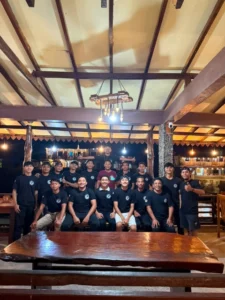
For travelers who want zero logistics to manage, Bukit Lawang Orangutan Tour offers combination packages that bundle private Medan transfers, guesthouse accommodation, and fully guided jungle treks into a single booking. Guesthouse rates in Bukit Lawang generally start from around IDR 250,000 per night depending on season and room type, though rates vary. Guides operating these treks are recommended to hold HPI certification, the Indonesian Tourist Guide Association credential that requires formal training, a passed examination, and periodic renewal, travelers should confirm guide credentials directly with any operator before booking. Those qualifications translate to hands-on knowledge of local trails, wildlife behavior, and forest conditions that no guidebook replicates.
This matters particularly for first-time visitors navigating transport from Kualanamu International Airport, which can take 3-5 hours depending on traffic. Having one responsible operator handle the entire journey from arrival to jungle removes the planning burden that often makes independent travel in Sumatra more complicated than it needs to be.
The Ethical Rules That Protect Every Encounter
These rules exist because orangutans are critically endangered and because proximity between humans and great apes creates real disease transmission risks. Following them isn’t a courtesy. It’s the condition on which responsible trekking operates.
Behavior Around Orangutans and Other Wildlife
Never feed, touch, corner, or call any animal. Keep a minimum distance of 7-10 meters from orangutans, and increase that distance if one approaches you. Back away rather than holding your ground. Flash photography is off, always. Follow your guide’s lead on when an encounter begins and when it ends, because that judgment comes from experience, not enthusiasm.
If you’re trekking with any respiratory illness, postpone. Human diseases transfer to great apes with alarming ease, and responsible operators ask about this before departure. Pack out everything you bring in; leeches and mud are part of the experience, but plastic waste in a UNESCO heritage site is not.
Choosing an Operator That Enforces These Standards
Ask any potential operator whether guides hold HPI or equivalent licensing, whether group sizes are capped, and whether the company prohibits feeding or staged encounters. Any operator promising guaranteed close contact should be viewed with immediate skepticism. That kind of contact requires baiting, which harms the animals and the ecosystem.
Responsible operators enforce strict no-feeding and
no-touching rules across all Sumatra orangutan treks. Ask to see their written policy, confirm that guides won’t use food to attract animals, and check whether they will end an encounter if the situation warrants it. That discipline is what makes encounters meaningful rather than extractive. Bukit Lawang Orangutan Tour applies these standards across its operations, and the team is happy to walk prospective guests through their approach before booking.
Best Months to Trek and What Sighting Statistics Actually Mean
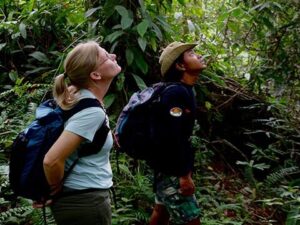
May through September offers drier trails, more reliable river conditions, and the highest reported encounter rates. June through August is the peak window, with local guides citing roughly 85% orangutan sighting rates compared to around 60% during the wet season running from November to February, based on field logs and guide experience across multiple seasons. July and August are the busiest months; May, September, and late March offer similar conditions with noticeably fewer visitors on the trails.
Those percentages come from guide experience rather than scientific surveys, and it’s worth understanding what they actually describe. A sighting on popular routes most often means a semi-habituated orangutan near an established trail, which is a real encounter with a wild animal but not the same as a deep-jungle sighting on a 5-day expedition. Rain is possible in every month; bring a rain layer regardless of when you go. The forest doesn’t pause for good weather.
Getting to Bukit Lawang and Preparing for the Trail
Bukit Lawang sits roughly 3-5 hours from Medan and Kualanamu International Airport, depending on traffic and route. A private transfer booked through an operator costs IDR 650,000-800,000 per vehicle for up to four passengers and is the most practical option, especially for late arrivals or families with luggage. Shared tourist buses run for approximately IDR 190,000-250,000 per person. Public buses via Binjai are the cheapest option at under IDR 100,000 total, but they require multiple vehicle changes and operate without a fixed schedule, which can complicate arrivals with specific trek start times.
For a single day trek, pack sturdy closed shoes, a light rain layer, insect repellent, a refillable water bottle, and a dry bag for your phone and documents. For overnight treks, add a headlamp with spare batteries, personal medications, and a lightweight change of clothes. Most camping gear, including tents, bedding, and cooking equipment, is provided on overnight packages, but confirm this with the operator before departure. A power bank is worth adding to your kit for multi day formats. Booking at least a week in advance during peak season is practical; the best guides fill up quickly in June and July.
The Forest Gives You More Than You Came For
Sumatra orangutan treks are named for their most famous resident, but the forest around Bukit Lawang is far richer than any single species. The orangutans are extraordinary. The gibbons calling at dawn are something else entirely. The hornbills crossing overhead on a clear afternoon are the kind of sighting people mention unprompted years later.
A 2-3 day trek during the May-September window, guided by certified guides from a responsible local operator, gives you the best realistic chance of experiencing genuine wildlife diversity in one of Southeast Asia’s most important rainforests. The orangutans may be the reason most people book. The rest of what lives in that forest is the reason most people want to return.
To compare itineraries for Sumatra orangutan treks, review inclusions, and request a booking, get in touch with the Bukit Lawang Orangutan Tour team directly. They’ll help you find the right format for your schedule, fitness level, and what you’re hoping to take home from the forest.